Water Heater: Repair It or Replace It?
What your water heater is doing tells you whether to repair it, and your house tells you what to replace it with.
September 23, 2026 · 4 min read
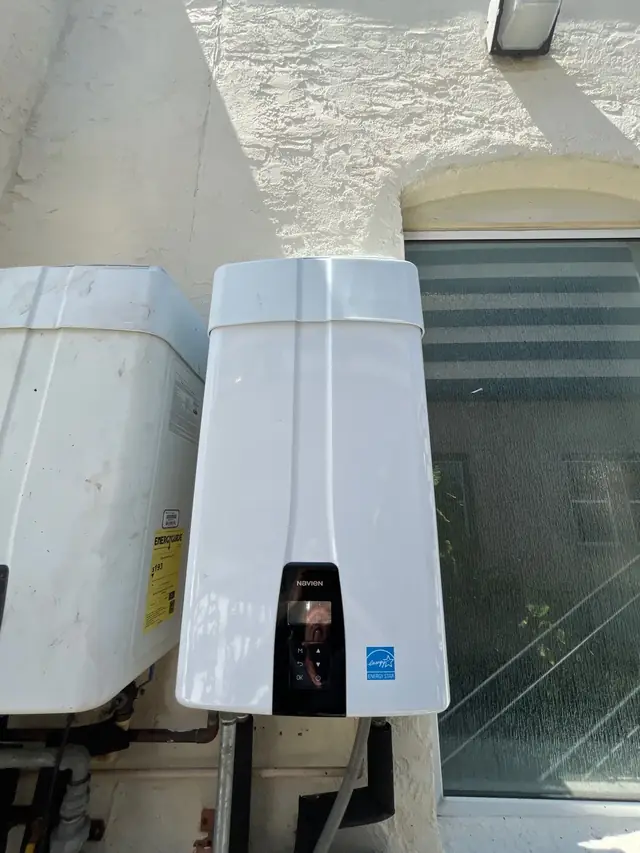
Most water heaters don't announce that they're failing. You find out when the shower runs cold, or when you spot a wet patch on the floor around the base. That's a bad moment to start researching, so it helps to know how the decision works before you're standing in the garage with a flashlight. The short version: what the unit is doing tells you whether it needs a repair, and the type of heater you'd want next depends on your house and how your household uses hot water.
Read the symptoms first
Different symptoms point to different problems, and only some of them mean the heater is finished. No hot water at all, or water that never gets very warm, is often a failed part: a heating element or thermostat on an electric unit, or a pilot, igniter or burner problem on a gas unit. A rumbling or popping sound while it heats usually means sediment has built up in the bottom of the tank, which is a maintenance issue before it's anything else. Rusty or discolored hot water, water leaking from the tank itself, or a heater that seems to run constantly to keep up are the symptoms that deserve a harder look.
When repair is the sensible call
Repair makes sense when the problem is a single part and the tank is otherwise sound. A bad element or thermostat, a leaking fitting or a worn valve on top can often be fixed without touching the tank. A newer unit that's still under a manufacturer warranty on the tank is another reason to lean toward repair. Before you assume the worst, look at where the water is actually coming from. A drip at a connection or a relief valve is a different problem from water seeping out of the bottom of the tank.
When replacement is the better call
A leak from the tank itself is the clearest sign. Once the steel has corroded through, no part can fix it, and the water will keep coming. The other signs are quieter. Look at the rating plate on the side of the heater: the serial number usually encodes the manufacture date, and the manufacturer's website will show you how to read it. If the heater is old and you've already paid for a repair or two, the next repair is often a poor bet compared with putting that money toward a new unit. Rusty water on the hot side only, with the cold side running clear, also points to the inside of the tank.
Gas, electric, tankless or hybrid
If you're replacing, you aren't limited to buying the same thing again. LT Plumbing works on gas, electric, tankless and hybrid or high-efficiency water heaters, and each one suits a different house.
A gas tank heater warms the water with a burner, so it needs a gas supply and a vent path to the outside. An electric tank heater has no burner and no exhaust, which makes it simpler to place, but it needs a suitable electrical circuit. A tankless unit heats water only as it flows through, so there's no tank to run out of. The limit is flow: one unit can only heat so much water at once, so think about whether two showers and the dishwasher ever run together. A hybrid water heater pulls heat from the surrounding air instead of generating it all directly, which is why it's called high-efficiency. It needs room and airflow around it, so it isn't a fit for every closet.
Switching from one fuel to another, electric to gas or the reverse, can mean new gas piping or new electrical work. Raise that early, because it changes what the whole job involves.
Questions worth answering before you call
- How many people use hot water, and do showers overlap in the morning?
- Where does the heater sit: a garage, a closet, an attic or outside?
- Does the house already have gas, or is it all electric?
- How long do you plan to stay in the house?
What to expect when LT Plumbing replaces one
LT Plumbing handles repair, replacement and maintenance on all four types. LT Plumbing gives a free estimate before work begins, so you know what you're agreeing to. On a replacement, they haul away the old equipment, set up the new unit and double-check every connection. Their workmanship carries a one-year warranty, and additional warranties are available on hot water heater installations when applicable. Ask what the manufacturer covers on the model you choose, too, since that's separate from the workmanship.
Keeping the next one going
A water heater that's flushed and inspected regularly tends to give you fewer surprises. LT Plumbing's plumbing maintenance visits include a water heater flush and inspection, plus a tankless fluid inspection where that applies.
One safety note: if you ever smell gas near a gas water heater, leave the house, avoid touching light switches, and call the gas company or 911 from outside. Then call your plumber.
If you're out of hot water right now
LT Plumbing has been locally owned in Palmetto since 2006 and is a Florida Certified Plumbing Contractor, license CFC1431822. They offer same-day response when the schedule allows and take emergency calls 24/7. When you call (941) 729-1111, tell them what the heater is doing and whether you can see water around the base. That's the fastest way to sort out a repair from a replacement.
LT Plumbing LLC, (941) 729-1111
Call (941) 729-1111More articles
The First Ten Minutes After a Pipe Bursts
The first ten minutes after a pipe bursts decide how much damage you clean up afterward.
4 Warning Signs Your Plumbing Needs a Closer Look
Plumbing trouble is usually quiet at first, and these four signs are how it shows up before it becomes an emergency.